29 August 2008

28 August 2008
Please check that the toilets are vacant before turning off the lights
 Big Ideas - January 24 2004: Zach Hall (60min) This is one of those very rare neuroethics lectures that doesn't stink. Maybe because Zach Hall is a neuroscientist. Good stuff. To be contrasted with Leon Kass - The Dignity of Human Flourishing: Biotechnology and the Pursuit of Happiness (1hr43min) which I post here only as a reference. I strongly advice you NOT to listen to this lecture - the experience is very very very painful. Leon Kass is a profoundly bioconservative, former member of the bioethics council of the American philosopher George W Bush. In case of accidental exposure, quickly watch the following debate and remind yourself repeatedly that Kass's amygdalae are hypersensitive to any mention of changing human nature and his Brocca is desperately trying to work out why.
27 August 2008
Jon Stewart Cancer Ad
Is it just me or are Stewart/Colbert Comedy Central videos no longer available in England?
26 August 2008
25 August 2008
24 August 2008
Ode to rewarding brain stimulation
"After sending a single electric shock to
the axons of dopamine neurons,
extracellular dopamine concentrations
in the dorsal and ventral striatum
rise
within 1.3-10.0 ms
from baselines of 5-10 nM
via intrasynaptic peaks of 500-3000 nM
to extrasynaptic concentrations of 250-500 nM in rats and guinea pigs
and 500-1600 nM in monkeys
(Kawagoe et al. 1992, Dugast et al. 1994, Garris et al. 1994, Cragg et al. 2000)
Concentrations quickly become homogenous
at ~80 nM
within a sphere
of 3.5-4 micrometers in diameter
(Gonon 1997, Cragg & Rice 2004),
which is the average distance
between the dopamine-releasing varicosities
(Doucet et al. 1986).
Maximal diffusion is reached within
75 ms after release onset
and extends to 7-12 micrometers,
even with intact reuptake transport.
Multiple electrical shocks
at intervals of 16.66 to 500 ms (2-60 Hz)
induce peaks
exceeding 4000 nM after 200-300 ms,
which are higher
than those obtained
with the same number
of more widely spaced impulses
(Garris & Wightman 1994, Gonon 1988, 1997)
Owing to the action
of the extrasynaptic dopamine reuptake transporter,
concentrations come back to baseline
within 200 ms
after singel pulses
and within 500-600 ms
after multiple pulses."
- Wolfram Schultz (2007) Multiple Dopamine Functions at Different Time Courses
23 August 2008
Pick and choose
I wrote a little while back that science does not describe every aspect of human existence.
Much that we are and see and do is infused with the unspeakable complexity of our brains, bodies and their embedding in the world. Many things cannot be defined in the language of science and some things can probably not be defined at all.
Meanwhile, there is superstition in the world, and it's important to get things right. We are error prone and biased, science is not.

Much that we are and see and do is infused with the unspeakable complexity of our brains, bodies and their embedding in the world. Many things cannot be defined in the language of science and some things can probably not be defined at all.
Meanwhile, there is superstition in the world, and it's important to get things right. We are error prone and biased, science is not.
22 August 2008
Mob rule
Former Singaporean Ambassador to the UN: "The West has got it all wrong - the rest of the world is bemused by the West's moralizing on Georgia."
BBC: Huh?
Former Singaporean Ambassador to the UN: "Well, you know, the key point here is that the West has a kind of incestuous, self-referential, self-congratulatory dialogue among Western minds about how the world thinks, you know? And the key point to remember is that the West represents 10% of the world's population, and the 90% outside who are getting more intelligent can every day see Western double-standards, okay?"
(Heard on BBC's World Service Newshour ca 13:45 today)
BBC: Huh?
Former Singaporean Ambassador to the UN: "Well, you know, the key point here is that the West has a kind of incestuous, self-referential, self-congratulatory dialogue among Western minds about how the world thinks, you know? And the key point to remember is that the West represents 10% of the world's population, and the 90% outside who are getting more intelligent can every day see Western double-standards, okay?"
(Heard on BBC's World Service Newshour ca 13:45 today)
18 August 2008

17 August 2008
Turning yourself into a work of art
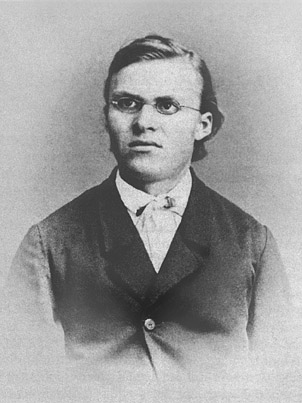
Aaron Ridley on Nietzsche on Art and Truth (15min, Philosophy Bites)
15 August 2008
14 August 2008
Neuropath

It's been a very long time since I read a book and then re-read it, highlighting large portions of every single chapter. I cannot recommend this book strongly enough.
Science has all but banished magic, God and souls from our thinking, yet we continue to insist on the importance of morality, responsibility, personhood, meaning and reason. Why? Because we feel their importance so directly. But feelings are neurons, and neurons have no selves. Nor, science continues to reveal, do brains.
This Argument (and I'm not saying I agree with it, but it should not be left unsaid) is summoned with truly exceptional depth, intensity and repetition in this thriller. Someone finally said it, said it all and more. Although occasionally storyline-light and over-American, the uncomparable interweaving of psychology, philosophy and ruthlessly reductionistic neuroscience into the plot makes this book an absolute must for anyone tired of and troubled by the wishful, superstitious and self-glorifying excuse of an existentialism we are fed with in this quasi-religious culture of ours (referred to as 'Disney World' throughout the book). What happens when the bullshit finally fails, when the scientific findings can no longer be ignored? This book rigorously pushes that question further than any text I've ever read.
Rest assured I will return with some quotes from the book once I've finished highlighting and shed some light on what it is I'm raving about. I certainly differ with Bakker here and there, particularly on the Spinozean slant on some of the later chapters, but at this point I just wanted to get the word out.
Adrian, I wish you everlasting beer, BBQ, pussy and sunshine for insisting I read this book.
13 August 2008
06 August 2008
Dopaminergics
This is the second update to the programming section on the iPlant website and on Knol. 'Dopaminergics' is a play on words like neuroinformatics, but the general idea is something I take very seriously. I think a quantitative understanding of dopamine signalling in the brain will allow us to bridge the gap between sensory input and motor output.
In recent years it has become possible to assign exact numerical values to the dopamine release that accompanies specific rewards and states of attention. Microdialysis probes and other biosensors associate rewards, particularly unexpected rewards and rewarding brain stimulation, with sharp increases in dopamine concentration in the prefrontal cortex and basal ganglia in many animals. States of high or low attention have similarly been associated with high or low concentrations of dopamine in the prefrontal cortex. These numerical relations are referred to as dopaminergics.
Dopaminergics describe the relation between dopaminergic events (e.g. a salient object in the environment, the activation of a deep brain stimulation electrode, the discovery of a solution to a problem), dopamine release (e.g. 20nM increase in prefrontal cortex as evidenced by a microdialysis probe) and brain/mental states (e.g. attention, motivation, learning, memory, motor output). It may be helpful to think of dopaminergics as assembly code for the learning brain.
Early references to the dopaminergics of rewarding brain stimulation:
Garris et al (1997) Real-time measurement of electrically evoked extracellular dopamine in the striatum of freely moving rats. Journal of Neurochemistry;
Fiorino et al (1993) Electrical stimulation of reward sites in the ventral tegmental area increases dopamine transmission in the nucleus accumbens of the rat. Behavioral brain research;
Bean & Roth (1991) Extracellular dopamine and neurotensin in rat prefrontal cortex in vivo: effects of median forebrain bundle stimulation frequency, stimulation pattern, and dopamine autoreceptors. Journal of Neuroscience.

Defence mechanisms
Here's the first of two updates to the programming section on the iPlant website and on Knol. If it's not clear why I'm calling these entities defence mechanisms it's because it's not clear to me either.
It seems likely that no one person would be able to avoid devestating addiction if given full control over a DBS implant regulating electrical activity in strongly rewarding/dopaminergic regions of his or her brain, such as the ventral tegmental area or substantia nigra pars compacta. Like rats do in that situation, a person would probably self-stimulate to the exclusion of any other behaviour and to the point of complete exhaustion. To prevent such short-circuiting and allow rewarding brain stimulation to be tied to useful behaviours (thus generating motivation to perform such behaviours), iPlant users will have to accept restrictions (access control) on their ability to modify the software of their iPlant. Such restrictions are referred to as defence mechanisms.
Defence mechanisms will include restrictions on variables such as the strenght and frequency of stimulation, but also on less obvious variables such as the number of hours per day that a user can use his or her iPlant. Moreover, defence mechanisms should include prudent practises that prevent the degeneration of natural self-dicipline: the cortex must be allowed to activate dopaminergic midbrain neurons in a healthy way even if the user has the option of activating those neurons with an iPlant - in other words, users must not become too dependant on their iPlant for motivation.

More God
While I'm on the topic of Christianity, here's three prayers I just translated from Swedish and links to dad's updated website (www.skolhuset.nu) and latest book (www.innerlighet.se).
65
Prayer of the United Nations
Source of Life and Goodness, our Earth is but a speck of dust
It is our task now, to make it a planet
where no one suffers war, hunger or fear
where no one is rejected for country, appearance or opinion
Source of Life and Goodness, bless us with courage and foresight
to carry out this task
so that our children and grandchildren
may call themselves human with pride
76
Creation
Endless window panes, a thousand million suns
shine like fire in your universe
Our tiny Earth is hard to spot
You, who made all this: Give us meaning
You filled space with dark matter
It holds the Milky ways together
Oh, if only we could hold together in love
Make the tender bonds between us strong
You chartered the depths of the black holes,
where time itself deforms
What approaches them shines violently
Protect us at our precipice, ignite the light in us
You created endless oceans of time
that stretch out long before the Earth was formed
Man is younger still, only a child
Give us the hope and the courage to live
Earth, your cosmic pearl, brilliantly beautiful,
sea and flowing plains and jagged mountains
Perils from space but also from ourselves
Protect your treasure, our only home
See these wonderful plants and animals,
myriad riches, never seizing to amaze
formed by your chance and merciless struggle
Teach us respect, don't let us harm
You, who blessed us with perception
senses that show us order, meaning and form,
perpetually you recreate the world within us
Give us your creative flame, and teach us to relax
- Bengt Gustafsson (1943-)
205
Facing change
Source of Life and Goodness, help us face that which we do not understand
Grant us courage to face the new,
patience to comprehend the strange
and wisdom to receive the good that hides where we least expect it
Help us honour all good will and honest strife
And if we reject the views of another
help us to accept her as a human being
- Adapted from William Penn (1644-1718)
05 August 2008
A Christian bioethics podcast
One of the reasons biotechnology is so meaningful/important/salient/dopaminergic to me is that it catalyses thinking about the larger existential picture, in everyone. It puts us face to face with what life and human beings really are, what we think they are, and what we want them to be.
Like transhumanists, Christians are often seriously annoying. But say what you will, at least they take the existential challenge of biotechnology seriously. Like transhumanists, Christians have enough courage and imagination to strive for immortality and the transcendence of the human body. Unlike humanists and existentialists, they the have good sense to reject, violently, the assertion that this life, this absurd affair right here, is it.
 No surprise then that one of the best the best bioethics podcast I've come across so far is from the Center for Bioethics and Human Dignity, a Christian think-tank.
One quote:
The painting is by Emin Sinanyan, and is called 'LABYRINTH: Maybe I'm Crazy'.
Like transhumanists, Christians are often seriously annoying. But say what you will, at least they take the existential challenge of biotechnology seriously. Like transhumanists, Christians have enough courage and imagination to strive for immortality and the transcendence of the human body. Unlike humanists and existentialists, they the have good sense to reject, violently, the assertion that this life, this absurd affair right here, is it.
No surprise then that one of the best the best bioethics podcast I've come across so far is from the Center for Bioethics and Human Dignity, a Christian think-tank.One quote:
"One of the things I suggest is that these techno-sentimentalists don't address the real problem. They see the technology as evil and therefore they don't in any way try to take responsibility for the reactions that they have to these technologies. So I would suggest that while their criticisms and cautions are helpful, they can only take us so far, because most of us live in a world that's getting ever more immersed in technology, not less." - Michael SleasmanThe Bioethics Podcast
The painting is by Emin Sinanyan, and is called 'LABYRINTH: Maybe I'm Crazy'.
Subscribe to:
Posts (Atom)